United States GLP-1 Pricing Models Signal Potential Shift in Medicare Obesity Treatment Economics
New modeling from University of Chicago researchers suggests long-term Medicare sustainability for GLP-1 obesity therapies may depend more on pricing structure than clinical adoption alone.
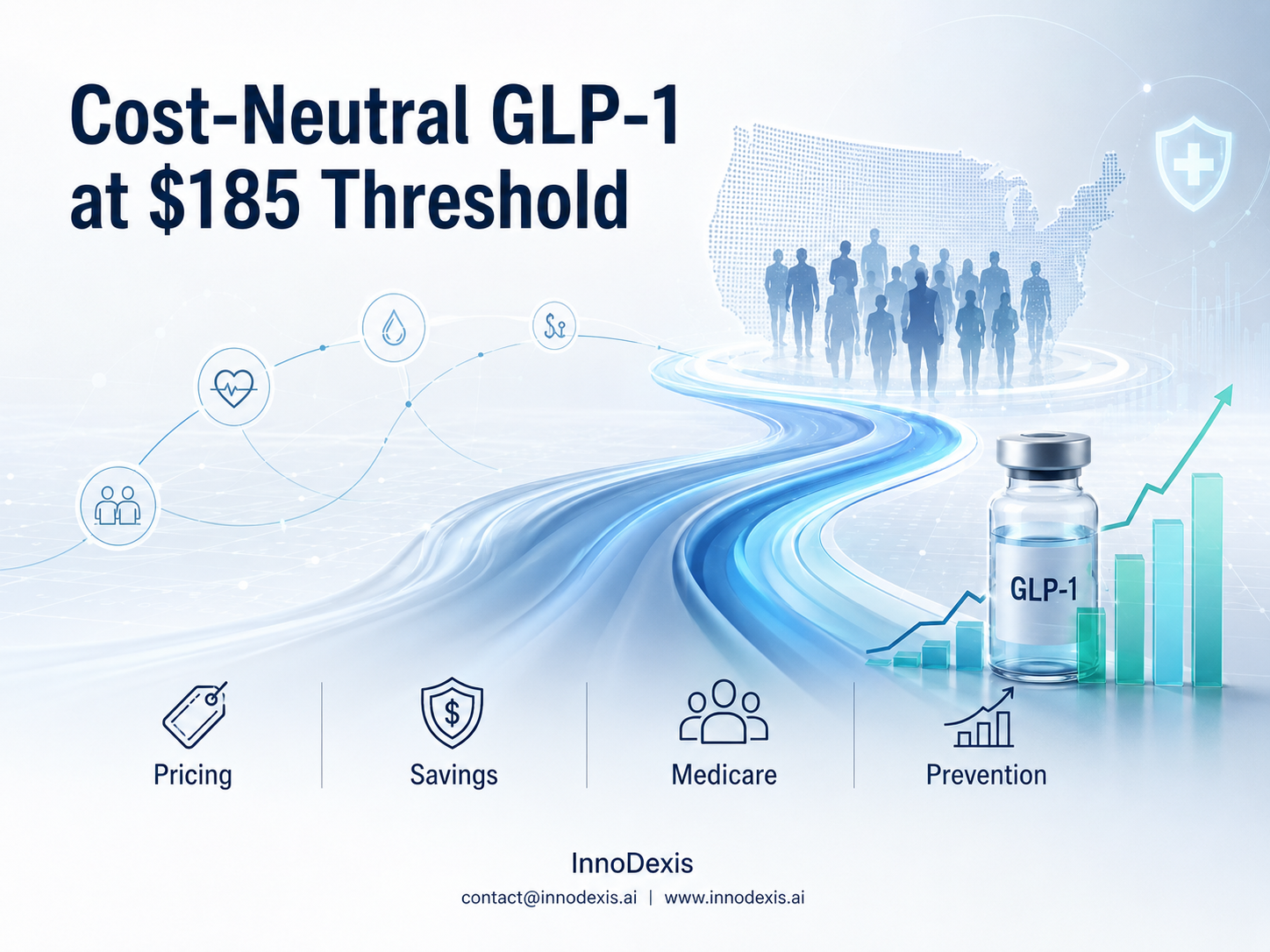
InnoDexis has published its latest Innovation Intelligence Report covering GLP-1 obesity therapies and healthcare financing models, analyzing emerging economic and policy dynamics surrounding population-scale obesity treatment in the United States. The report reveals that proposed “Most Favored Nation” pricing scenarios could significantly alter the long-term Medicare economics of GLP-1 coverage for obesity management. Researchers at the University of Chicago modeled the potential 10-year impact of covering GLP-1 therapies for approximately 30 million Medicare beneficiaries with obesity, finding that pricing thresholds may determine whether large-scale obesity treatment becomes financially sustainable at a national healthcare system level.
Key Findings
The report identifies Medicare-scale economic modeling as a central development in the evolution of GLP-1 therapies. Researchers evaluated the projected 10-year financial impact of extending Medicare obesity treatment coverage to roughly 30 million beneficiaries. The analysis reflects how obesity therapeutics are increasingly being assessed not only through clinical outcomes, but also through long-term healthcare system affordability and reimbursement sustainability.
One of the most significant findings involved projected spending reductions under proposed “Most Favored Nation” pricing assumptions. At an estimated Medicare price of approximately $245 per month, researchers projected net additional Medicare spending of about $18 billion over a 10-year period. The findings suggest that pricing adjustments alone may materially change the long-term fiscal feasibility of large-scale obesity treatment coverage.
The report also highlights the estimated cost-neutral threshold identified in the model. Researchers projected that GLP-1 therapies could approach overall Medicare cost neutrality at roughly $185 per month. This threshold emerged as a key economic benchmark because it indicates the level at which downstream healthcare savings may substantially offset long-term pharmaceutical spending.
Another major finding concerns the projected balance between direct drug expenditures and healthcare savings. The model estimated approximately $74 billion in GLP-1 drug spending offset by nearly $56 billion in downstream healthcare savings over the modeled period. These savings were associated with reduced healthcare utilization linked to obesity-related chronic conditions, including diabetes and cardiovascular disease.
The findings further identified long-term weight-maintenance therapy as the dominant cost driver. While initial clinical effectiveness remains important, the report suggests that sustained treatment duration and continued reimbursement obligations may ultimately determine the economic viability of population-scale obesity management programs within Medicare systems.
Strategic Insight and Trend Analysis
The broader significance of these findings reflects a structural shift in how obesity treatment is being positioned within healthcare systems. GLP-1 therapies are increasingly moving beyond the traditional framework of specialty pharmaceuticals toward a model more closely associated with long-term preventive health infrastructure. This transition may substantially alter how healthcare systems evaluate pharmaceutical spending, reimbursement strategy, and public health investment.
Historically, many obesity treatments were assessed primarily through short-term clinical outcomes or individual patient reimbursement models. The University of Chicago analysis indicates that future policy discussions may increasingly center on long-horizon healthcare economics, population-level savings, and systemic healthcare utilization effects. This reframes obesity treatment from an isolated therapeutic category into a broader healthcare financing challenge tied to national expenditure management.
The emergence of cost-neutral pricing thresholds is particularly significant because it introduces a measurable economic framework for evaluating preventive pharmaceutical interventions at scale. Rather than focusing solely on drug efficacy or market demand, healthcare systems may increasingly model pharmaceutical adoption through long-term fiscal sustainability metrics. This could influence future pricing negotiations, reimbursement models, and public-sector coverage decisions across multiple therapeutic categories.
The findings also suggest that chronic disease prevention may become increasingly integrated with healthcare infrastructure planning. If long-term downstream savings from obesity treatment continue to demonstrate measurable reductions in diabetes, cardiovascular disease, and related healthcare utilization, policymakers and payers may begin evaluating obesity therapeutics similarly to other forms of preventive system investment.
Collectively, the report points toward a future in which pharmaceutical pricing strategy becomes deeply interconnected with healthcare system architecture, public finance planning, and national preventive health policy.
Global and Industry Implications
For corporates and healthcare R&D organizations, the findings reinforce the growing importance of demonstrating long-term economic value alongside clinical efficacy. Pharmaceutical developers may increasingly need to support therapies with large-scale healthcare utilization models, long-duration outcomes data, and payer-focused economic evidence to secure broad reimbursement adoption.
For investors and capital allocators, the report signals that future value creation in obesity therapeutics may depend not only on drug demand, but also on reimbursement sustainability and healthcare financing alignment. Companies capable of operating within evolving public-sector pricing frameworks may gain strategic advantages as obesity treatment expands into large-scale population health programs.
For policymakers and national healthcare bodies, the findings highlight the growing complexity of balancing preventive healthcare expansion with long-term fiscal management. As obesity-related chronic disease costs continue to rise, pricing negotiations and reimbursement structures may become central tools for determining whether broad preventive treatment adoption remains economically sustainable within public healthcare systems.
InnoDexis Statement
“The long-term expansion of GLP-1 obesity treatment may increasingly depend on whether pharmaceutical pricing models can align with population-scale healthcare financing realities,” noted InnoDexis in its latest intelligence report.
Conclusion
The University of Chicago findings suggest that the future of GLP-1 obesity treatment may be shaped as much by healthcare economics as by clinical performance. As Medicare systems evaluate long-term treatment affordability, pricing thresholds and downstream healthcare savings could become defining factors in future obesity policy decisions. The growing integration of pharmaceutical pricing, preventive healthcare modeling, and public finance strategy may reshape how chronic disease interventions are funded at national scale. InnoDexis will continue tracking developments in obesity therapeutics, healthcare financing systems, and preventive care economics influencing the future structure of healthcare innovation. The complete GLP-1 Medicare Economics and Preventive Healthcare Intelligence Report is available to InnoDexis subscribers and enterprise clients.
About InnoDexis
InnoDexis is a global Innovation Intelligence platform that tracks, analyzes, and interprets breakthrough innovations, prototypes, and emerging technologies across industries and countries. Its intelligence helps corporates, investors, and policymakers understand the true structure and direction of global innovation. Learn more at innodexis.ai.