Singapore Advances Bioengineered Ophthalmology Research as Photosynthesis-Inspired Eye Therapy Demonstrates Rapid Cellular Recovery
Researchers at the National University of Singapore have developed a light-activated therapeutic platform that enables mammalian eye cells to generate protective antioxidant molecules using plant-derived photosynthetic machinery.
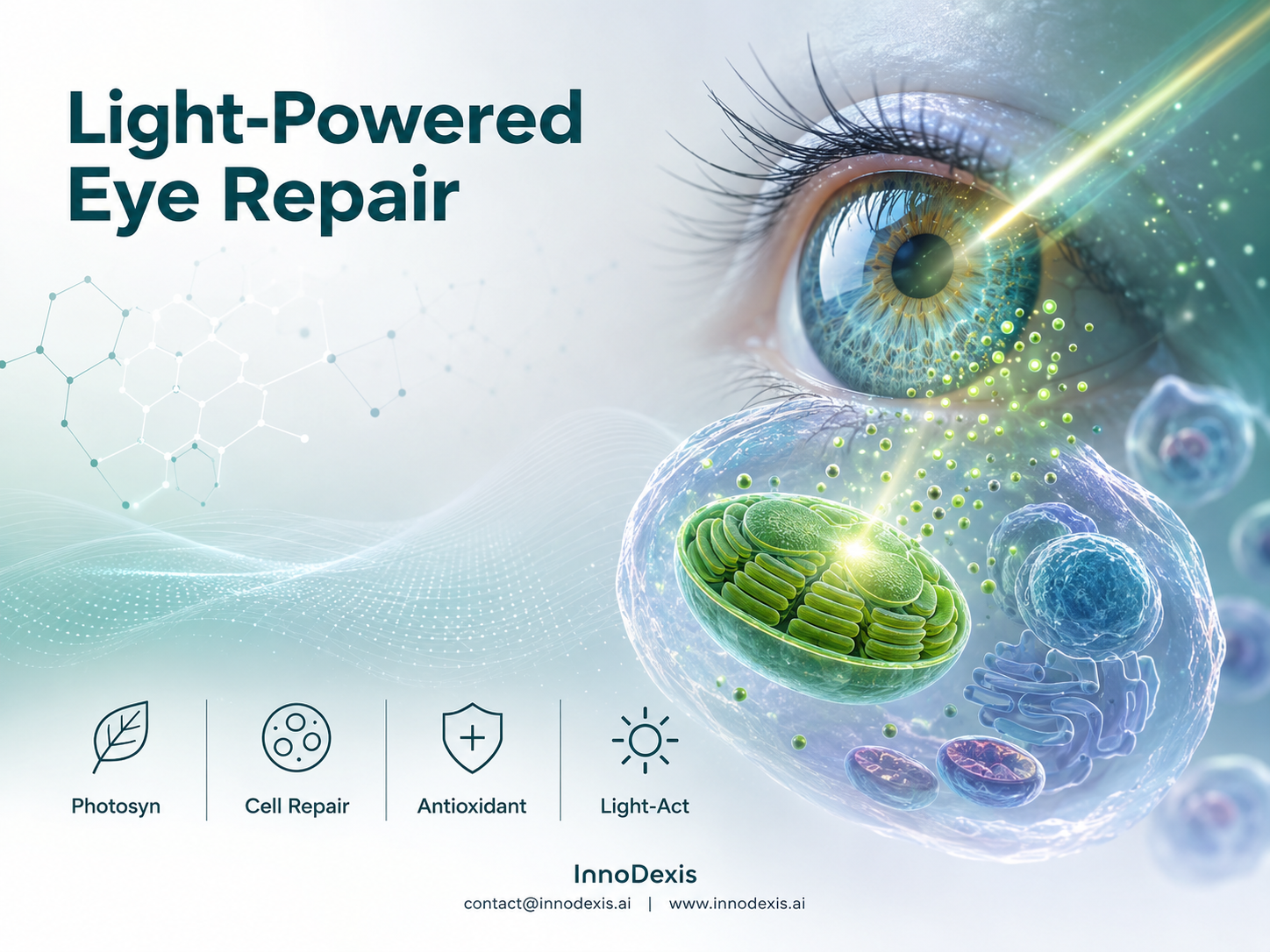
InnoDexis has published its latest Innovation Intelligence Report covering bioengineered ophthalmology systems and photosynthesis-inspired therapeutics, analyzing emerging developments in light-activated cellular treatment platforms. The report reveals that researchers at the National University of Singapore have developed a therapeutic eye drop called LEAF that uses plant-derived photosynthetic components to stimulate protective antioxidant generation inside mammalian eye cells. The findings indicate that bioengineered light-powered therapies may offer a new approach for treating oxidative stress-related diseases, particularly dry eye disease, which affects more than 1.5 billion people globally.
Key Findings
The report identifies the development of LEAF as a significant advancement in bioengineered ophthalmology systems. Unlike conventional dry eye therapies that primarily focus on suppressing inflammation, the platform enables mammalian eye cells to actively produce protective antioxidant molecules using ambient light. This introduces a different therapeutic model based on cellular metabolic enhancement rather than only symptom management.
Researchers engineered approximately 400 nanometre photosynthetic particles derived from spinach to create the light-responsive system. These particles function as photosynthetic machinery capable of generating reducing power inside mammalian cells when activated by light exposure. The work demonstrates how biological mechanisms originating from plants may be integrated into therapeutic systems for human cellular repair.
The report also highlights substantial biochemical improvements observed during testing. NADPH levels in patient tear samples increased by nearly 20-fold, while hydrogen peroxide levels were reduced by more than 95%. Because oxidative stress is closely associated with inflammation and tissue damage in dry eye disease, these findings suggest the therapy may significantly improve the antioxidant defense environment surrounding ocular tissues.
Another important finding concerns the speed of therapeutic response. Researchers reported that antioxidant activity in inflamed cells was restored within 30 minutes of light exposure. This indicates that light-triggered metabolic activation may produce faster cellular recovery dynamics compared with some conventional anti-inflammatory treatment approaches.
The platform also demonstrated strong preclinical performance in tissue recovery models. Corneal damage was reportedly reversed to near-healthy levels within five days during preclinical testing, while the therapy outperformed Restasis in comparative preclinical studies. Although the technology remains in preclinical development and human trials have not yet begun, the findings indicate growing potential for non-invasive light-powered therapeutic systems.
Strategic Insight and Trend Analysis
The broader significance of the LEAF platform extends beyond ophthalmology alone. The report suggests that biotechnology research is increasingly moving toward therapies that directly augment or reprogram cellular metabolic behavior rather than relying solely on pharmaceutical suppression pathways. In this case, photosynthetic biological mechanisms are being adapted into mammalian therapeutic systems to create light-responsive cellular repair processes.
This represents an emerging convergence between synthetic biology, nanomedicine, photomedicine, and regenerative therapeutics. Historically, photosynthesis has been viewed as a plant-specific biological process with limited relevance to human therapeutic systems. The LEAF platform demonstrates that selected photosynthetic functions may potentially be repurposed to support mammalian cellular resilience under oxidative stress conditions.
The ability to generate antioxidant molecules through ambient light exposure is particularly significant because it introduces the possibility of externally powered therapeutic metabolism. Rather than continuously delivering chemical compounds through repeated dosing alone, future systems may increasingly activate or support cellular repair mechanisms using environmental energy sources such as light.
The findings also reflect a broader industry transition toward non-invasive bioengineered treatment platforms. Across healthcare and biotechnology sectors, there is growing interest in therapies capable of improving biological function while reducing treatment complexity, chronic drug dependence, and systemic side effects. The rapid restoration of antioxidant activity observed in the study suggests that dynamic light-responsive therapies may eventually become relevant across multiple inflammatory and degenerative disease categories.
Collectively, the report indicates that bioengineered cellular therapies are evolving beyond conventional pharmaceutical paradigms toward programmable biological systems capable of interacting directly with cellular metabolism and environmental stimuli.
Global and Industry Implications
For corporates and R&D teams, the findings highlight growing opportunities in light-activated therapeutics, synthetic biology, and regenerative ophthalmology platforms. Biotechnology and pharmaceutical organizations may increasingly explore therapies that combine biomaterials, nanotechnology, and metabolic engineering to create non-invasive treatment systems for chronic inflammatory diseases.
For investors and capital allocators, the report signals expanding strategic relevance for bioengineered therapeutic infrastructure and next-generation ocular health technologies. Platforms capable of reducing treatment dependency while improving biological repair efficiency may attract increasing interest across biotechnology and healthcare innovation markets.
For policymakers and national innovation bodies, the findings reinforce the importance of supporting interdisciplinary biomedical research spanning nanomedicine, photomedicine, and bioengineering. As chronic inflammatory diseases continue to rise globally, scalable non-invasive therapeutic systems may become increasingly important for long-term healthcare accessibility and disease management strategies.
InnoDexis Statement
“The integration of photosynthetic biological mechanisms into mammalian therapeutic systems may represent an important shift toward externally powered cellular repair platforms in future medicine,” noted InnoDexis in its latest intelligence report.
Conclusion
The LEAF platform demonstrates how biological processes traditionally associated with plants may increasingly influence the future direction of therapeutic engineering. As researchers continue investigating light-powered cellular repair systems, new opportunities may emerge for treating oxidative stress-related diseases through non-invasive metabolic activation approaches. Although the technology remains in preclinical development, the findings suggest that future therapies may depend not only on chemical intervention, but also on dynamically supporting cellular function through engineered biological systems. The complete Photosynthesis-Inspired Therapeutic Systems Intelligence Report is available to InnoDexis subscribers and enterprise clients.
About InnoDexis
InnoDexis is a global Innovation Intelligence platform that tracks, analyzes, and interprets breakthrough innovations, prototypes, and emerging technologies across industries and countries. Its intelligence helps corporates, investors, and policymakers understand the true structure and direction of global innovation. Learn more at innodexis.ai.