Personalised Gene Editing Accelerates Across 10 Countries with 48 Breakthroughs in April 2026
Simultaneous advances in gene editing, delivery systems, cell therapy, and RNA therapeutics signal a transition toward integrated genomic medicine platforms.
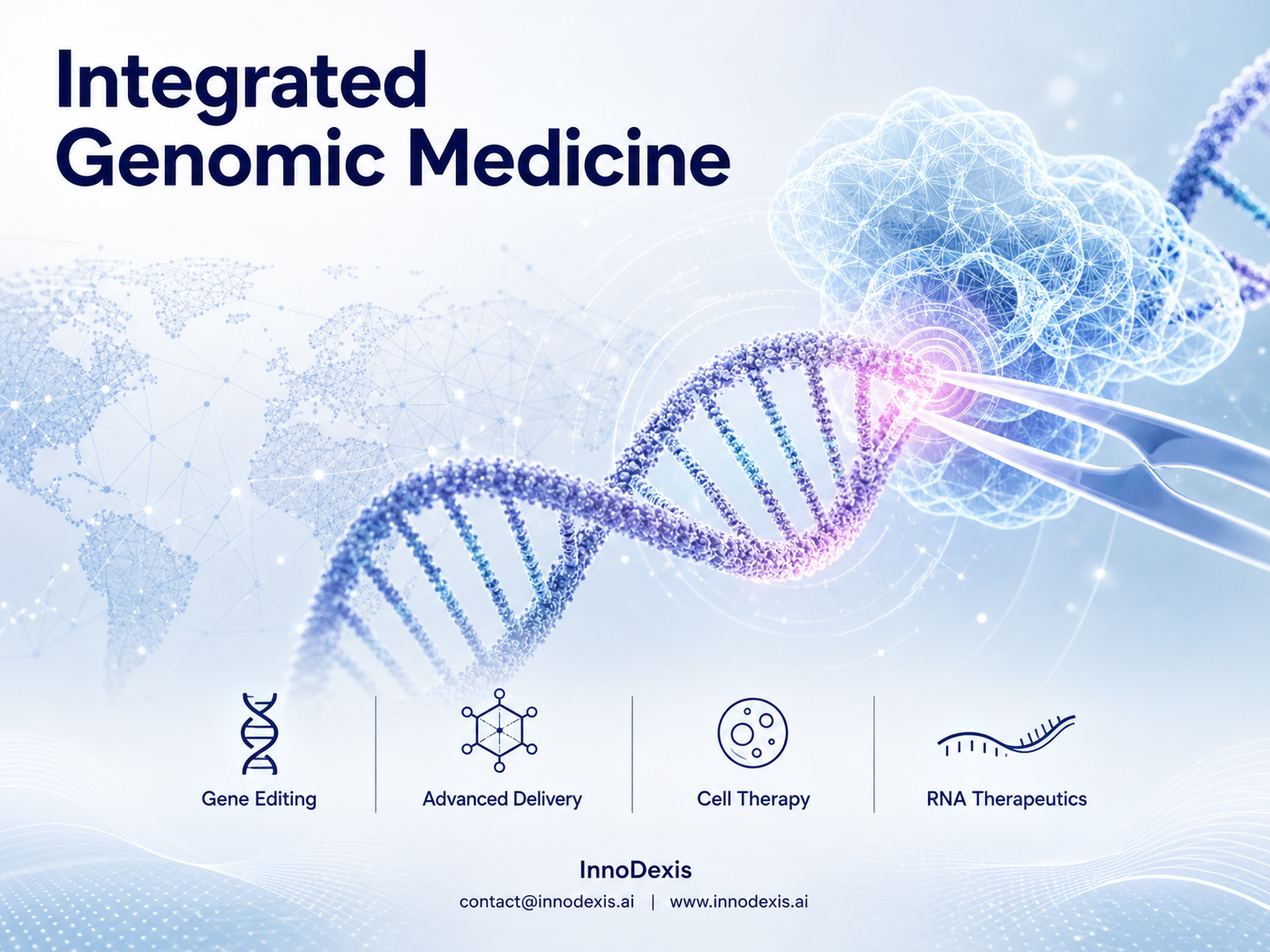
InnoDexis has published its latest Innovation Intelligence Report covering personalised gene editing, analyzing 48 breakthroughs across 10 countries and 39 institutions during April 2026. The report reveals that genomic medicine is entering a phase of coordinated acceleration, with simultaneous progress in gene editing, cell therapy, RNA therapeutics, and precision oncology. Rather than isolated advancements, the data indicates a multi-system surge, where improvements in editing precision, delivery efficiency, and clinical application are converging to enable more comprehensive therapeutic strategies.
Key Findings
A total of 48 breakthroughs were recorded across 10 countries and 39 institutions, indicating broad-based global participation in advancing personalised gene editing. The geographic and institutional spread suggests that innovation is not concentrated within a single region but distributed across multiple research ecosystems.
Clinical translation has reached a measurable milestone, with two gene therapies receiving approval from the Food and Drug Administration in the same month and first commercial patients treated. This indicates that gene editing technologies are progressing beyond experimental stages into real-world therapeutic deployment.
Delivery systems have demonstrated significant improvements, with CRISPR-based approaches achieving approximately 80–90% efficiency through viral vectors, vesicle-based systems, and nanoparticle delivery mechanisms. These advances address a key constraint in gene editing by improving the precision and reliability of therapeutic delivery.
Clinical outcomes are showing early indicators of effectiveness in selected use cases. Data includes 0% cancer recurrence at 33 months in specific patient cohorts and approximately 80% remission rates in autoimmune diseases using CAR-T therapy, suggesting expanding applicability of engineered cell-based interventions.
Editing capability has advanced at the molecular level, with DNA insertion capacity increasing by approximately 14×, enabling modifications of up to around 11,000 base pairs. This expansion allows for full gene-level edits rather than limited sequence adjustments.
Market activity reflects growing confidence in platform-level approaches, with multi-billion-dollar acquisitions indicating strategic investment in integrated genomic technologies rather than single-product assets.
Strategic Insight and Trend Analysis
The April 2026 findings indicate that personalised gene editing is transitioning from a linear development pathway into a convergent innovation system. Advances are no longer occurring in isolation within gene editing alone, but across interconnected domains including delivery technologies, cell therapy platforms, RNA-based therapeutics, and precision diagnostics.
The simultaneous progress in delivery efficiency, editing capability, and clinical outcomes suggests that multiple bottlenecks in genomic medicine are being addressed in parallel. Historically, limitations in delivery mechanisms and editing precision constrained the scalability of gene therapies. The reported 80–90% delivery efficiency and expanded DNA insertion capacity indicate that these constraints are being systematically reduced.
The integration of CAR-T therapy into autoimmune disease treatment further demonstrates the extension of engineered cell therapies beyond oncology. This broadening of application domains reflects a shift toward using programmable biological systems to address a wider range of conditions.
The convergence of these capabilities suggests that the next phase of innovation will be defined by platform integration. Rather than focusing on individual therapeutic breakthroughs, progress is increasingly dependent on how editing tools, delivery systems, clinical protocols, and data frameworks operate together. This integrated approach enables more precise, patient-specific interventions and supports the transition toward curative, one-time treatments.
Global and Industry Implications
For corporates and R&D teams, the findings indicate a need to develop integrated genomic platforms that combine editing technologies with delivery systems and clinical execution capabilities. Collaboration across biotechnology, data science, and clinical development may become essential for translating breakthroughs into scalable therapies.
For investors and capital allocators, the presence of multi-billion-dollar acquisitions suggests increasing emphasis on platform-based value creation. Investment strategies may shift toward companies that demonstrate integration across gene editing, delivery, and therapeutic application layers.
For policymakers and national innovation bodies, the acceleration of genomic medicine highlights the importance of regulatory frameworks that can accommodate complex, multi-component therapies. Supporting infrastructure for clinical trials, manufacturing, and long-term monitoring may be critical as personalised treatments move toward broader adoption.
InnoDexis Statement
“The April 2026 data indicates that genomic medicine is entering a convergent phase where advances in editing, delivery, and clinical application are reinforcing each other, enabling a transition toward integrated and scalable therapeutic platforms,” noted InnoDexis in its latest intelligence report.
Conclusion
The April 2026 Innovation Intelligence Report highlights a shift in personalised gene editing from isolated breakthroughs to coordinated, system-level advancement. As delivery efficiency improves, editing capabilities expand, and clinical outcomes continue to demonstrate potential, genomic medicine is moving closer to scalable, patient-specific interventions. Monitoring how these integrated platforms evolve and are commercialized will be central to understanding the trajectory of next-generation therapeutics. The complete Personalised Gene Editing Innovation Intelligence Report is available to InnoDexis subscribers and enterprise clients.