New Innate Immune Mechanism Identifies ZNFX1 as a Host-Directed Antiviral Target with Cross-Disease Relevance
A newly discovered ubiquitin web mechanism that traps viral genomes reveals a novel pathway linking antiviral defence with autoimmune and neurological disease.
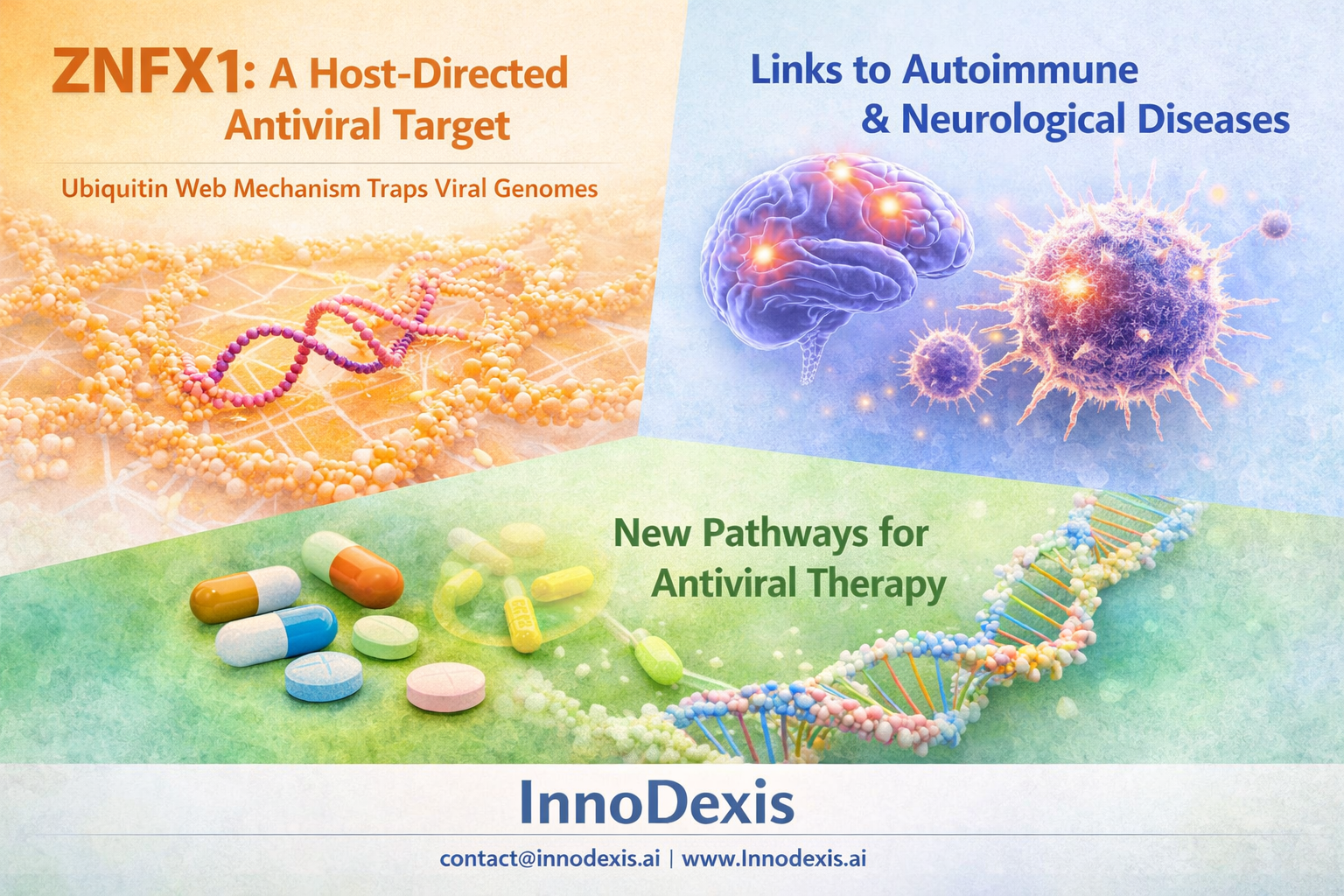
InnoDexis has published its latest Innovation Intelligence Report covering innate immunity and antiviral defence mechanisms, analyzing a newly identified cellular pathway involving the ZNFX1 protein during March 2026. The report reveals that human cells deploy a previously unknown defence mechanism in which ubiquitin chains assemble into a temporary web that traps viral genomes and slows replication. This discovery introduces a new molecular target for host-directed antiviral therapies and establishes a direct biological link between antiviral defence mechanisms and autoimmune and neurological disease pathways.
Key Findings
The analysis identifies a novel innate immune mechanism centered on the ZNFX1 protein, which detects viral RNA and initiates the assembly of ubiquitin chains into a physical web structure. This web acts as a containment system, trapping viral genomes within the host cell and preventing their immediate use in replication processes. The mechanism represents a previously undocumented layer of cellular defence.
The antiviral web operates as a temporary delay mechanism. It remains active for only a few hours before collapsing, after which viral replication can resume. This transient behavior indicates that the system functions as an early-stage defence, providing a limited time window for the broader immune response to activate.
The molecular architecture of the system is based on a two-component ubiquitin circuitry. This dual-component system enables the formation of structured ubiquitin chains that create the physical trapping mechanism. The discovery expands the functional understanding of ubiquitin beyond protein regulation to include direct antiviral defence roles.
A significant finding is the identification of the ZNFX1 pathway as a new molecular target for host-directed antiviral therapies. Unlike traditional antiviral approaches that target viral proteins, this mechanism focuses on enhancing the host cell’s natural defence processes, reducing vulnerability to viral mutation-driven resistance.
The analysis also establishes a direct connection between ZNFX1 gene mutations and severe autoimmune and neurological diseases. Impairment of the web-forming mechanism due to genetic mutations disrupts normal immune function, linking this pathway to broader disease mechanisms beyond viral infection.
Strategic Insight and Trend Analysis
The discovery of the ZNFX1 ubiquitin web reflects a broader shift in biomedical research toward host-directed therapeutic strategies. Traditional antiviral drug development has focused on targeting viral components, which often evolve rapidly and develop resistance. By contrast, targeting host-cell mechanisms provides a more stable intervention point, as host biology does not mutate in response to treatment in the same way as viral systems.
The temporary nature of the ubiquitin web introduces a key strategic insight. Rather than completely blocking viral replication, the system delays it, creating a critical window during which the immune system can respond more effectively. This suggests that future therapeutic strategies may focus on extending or stabilizing this delay rather than attempting to eliminate viral activity entirely.
Another defining trend is the convergence of multiple biomedical domains within a single molecular pathway. The ZNFX1 mechanism connects virology, immunology, and disease pathology, demonstrating how a single discovery can influence multiple therapeutic areas. This convergence increases the strategic importance of the pathway, as it provides opportunities for cross-domain drug development.
The identification of unresolved mechanistic questions—such as how ZNFX1 couples viral RNA sensing with web formation and why the web dissolves—highlights that the discovery is at an early stage. These open questions define the next phase of research required to translate the mechanism into practical therapeutic applications.
Global and Industry Implications
For corporates and R&D teams, the identification of the ZNFX1 pathway as a new therapeutic target presents opportunities to develop host-directed antiviral treatments. Companies focused on infectious disease, immunology, and molecular biology may explore this pathway as a basis for next-generation drug development strategies.
For investors and capital allocators, the discovery signals the emergence of a new category within antiviral therapeutics. Early-stage research programs targeting host immune mechanisms may represent long-term opportunities, particularly as resistance to traditional antivirals continues to pose challenges.
For policymakers and healthcare systems, the linkage between antiviral defence mechanisms and autoimmune and neurological diseases highlights the need for integrated research approaches. Policies supporting cross-disciplinary biomedical research may accelerate the translation of such discoveries into clinical applications.
InnoDexis Statement
“The identification of the ZNFX1 ubiquitin web introduces a new category of host-directed antiviral strategy with implications that extend across infectious disease and immune-related disorders,” noted InnoDexis in its latest intelligence report.
Conclusion
The discovery of the ZNFX1 antiviral web represents a significant advancement in the understanding of innate immune defence mechanisms. By revealing how cells temporarily trap viral genomes, the research provides a new framework for thinking about antiviral intervention strategies.
As further research clarifies the mechanisms governing web formation and dissolution, the potential to translate this discovery into therapeutic applications will become more defined. Monitoring developments in host-directed antiviral approaches and molecular pathway targeting will be essential for stakeholders seeking to understand the future direction of infectious disease treatment and immune system research.
The complete Innate Immunity & Antiviral Defence: ZNFX1 Ubiquitin Web Mechanism Innovation Intelligence Report is available to InnoDexis subscribers and enterprise clients.
About Innodexis
InnoDexis is a global Innovation Intelligence platform that tracks, analyzes, and interprets breakthrough innovations, prototypes, and emerging technologies across industries and countries. Its intelligence helps corporates, investors, and policymakers understand the true structure and direction of global innovation. Learn more at innodexis.ai.