Neuromorphic and Brain-Computer Interface Systems Converge as Biological Computing Gains Strategic Momentum
The latest Neuromorphic & BCI Intelligence Report identifies a growing convergence between neuromorphic computing, brain-computer interfaces, and biologically adaptive computing systems.
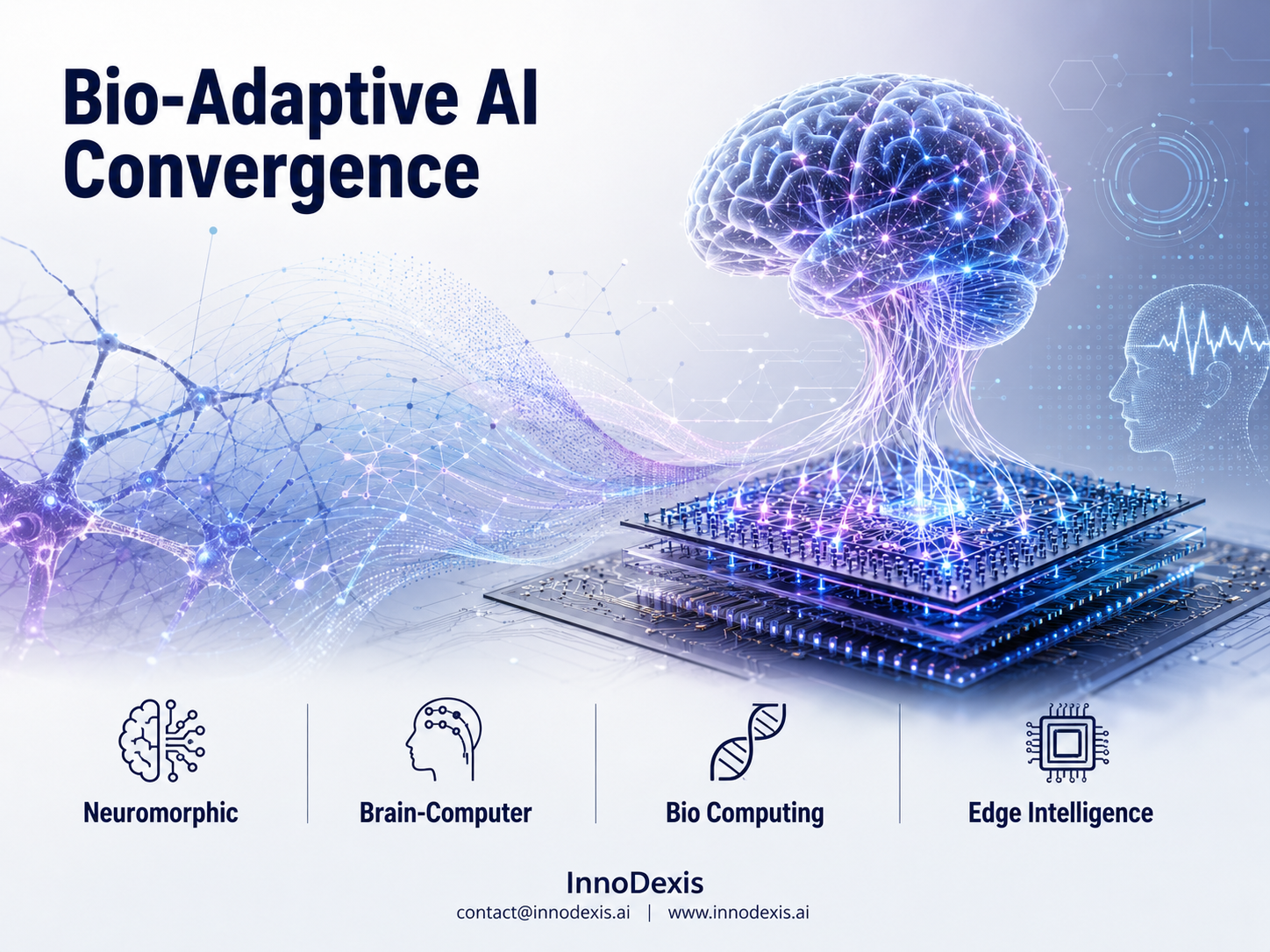
InnoDexis has published its latest Innovation Intelligence Report covering neuromorphic computing, brain-computer interfaces, and biological computing systems, analyzing 62 high-signal innovations across 14 countries and more than 55 institutions. The report reveals that previously separate domains—including neuromorphic hardware, neurotechnology, and bio-electronic computing—are increasingly converging into interconnected intelligence architectures. The findings indicate that next-generation AI infrastructure may increasingly depend on biologically adaptive and energy-efficient systems rather than conventional scaling models alone.
Key Findings
The report tracked 62 high-signal innovations distributed across 14 countries and involving more than 55 institutions, demonstrating broad international activity in neuromorphic computing and neurotechnology research. The diversity of participating institutions indicates that development is occurring simultaneously across academic, clinical, and engineering ecosystems.
Multiple neuromorphic systems demonstrated measurable reductions in AI energy consumption and latency. These findings suggest that brain-inspired computing architectures are increasingly being evaluated as alternatives to conventional AI processing systems constrained by power usage and thermal scaling limitations.
Brain-computer interfaces (BCIs) are progressing beyond experimental laboratory environments into regulated clinical infrastructure. The transition reflects growing institutional and regulatory confidence in neurotechnology systems designed for communication, rehabilitation, and assistive applications.
Hybrid computing systems are beginning to integrate biological neurons, adaptive hardware, and AI-driven signal processing into unified architectures. This convergence indicates movement toward computing frameworks capable of combining biological adaptability with electronic processing speed and precision.
The report also identifies increasing alignment between edge AI requirements and biologically inspired architectures. Energy-efficient learning, low-latency processing, and adaptive behavior are emerging as critical design priorities for robotics, prosthetics, and real-time cognitive systems.
Strategic Insight and Trend Analysis
The findings indicate that AI infrastructure development is entering a phase where biological principles are increasingly influencing computational design. Conventional AI scaling models remain constrained by rising energy demands, heat generation, and infrastructure costs associated with high-performance computing environments. In response, neuromorphic and bio-electronic systems are emerging as alternative architectures focused on efficiency and adaptability.
The convergence between neuromorphic computing, BCIs, and biological computing systems suggests that these fields are no longer evolving independently. Instead, they are forming an integrated technological stack in which sensing, learning, adaptation, and signal processing operate across both biological and electronic substrates.
Neuromorphic systems demonstrate that compute efficiency can be improved by mimicking neural processing structures rather than relying solely on larger digital models. At the same time, BCIs are expanding from research tools into clinical systems capable of interacting directly with neural activity. Hybrid architectures that combine biological neurons with adaptive hardware further indicate that future computing systems may increasingly blur distinctions between biological and electronic intelligence.
This transition also reflects a broader change in infrastructure priorities. Competitive advantage may shift from maximizing computational scale alone toward optimizing compute-per-watt efficiency, adaptive learning behavior, and real-time responsiveness. The findings suggest that future AI infrastructure could be defined less by centralized processing expansion and more by distributed, biologically inspired intelligence systems.
Global and Industry Implications
For corporates and R&D teams, the findings highlight growing opportunities in energy-efficient AI infrastructure, adaptive robotics, neurotechnology, and edge computing systems. Organizations developing semiconductors, medical devices, or intelligent hardware may increasingly need to integrate biologically inspired architectures into long-term innovation strategies.
For investors and capital allocators, the convergence of neuromorphic systems, BCIs, and biological computing indicates the emergence of a multi-domain infrastructure category with applications spanning healthcare, robotics, defense, and AI acceleration. Long-term value creation may depend on platforms capable of integrating biological adaptability with scalable hardware systems.
For policymakers and national innovation bodies, the development of biologically adaptive AI systems raises strategic considerations related to semiconductor competitiveness, neurotechnology regulation, and critical infrastructure resilience. Supporting research ecosystems that combine neuroscience, computing, and advanced manufacturing may become increasingly important.
InnoDexis Statement
“The convergence of neuromorphic computing, brain-computer interfaces, and biological computing systems indicates that future AI infrastructure may increasingly be defined by adaptive efficiency and bio-electronic integration rather than computational scale alone,” noted InnoDexis in its latest intelligence report.
Conclusion
The latest Neuromorphic & BCI Intelligence Report indicates that biologically inspired computing architectures are moving from exploratory research toward strategic infrastructure relevance. As neuromorphic systems improve energy efficiency, BCIs enter regulated clinical environments, and hybrid bio-electronic systems mature, the structure of AI infrastructure may undergo significant transformation. Monitoring how these technologies scale across healthcare, robotics, defense, and edge AI applications will be critical in understanding the next phase of intelligent systems development. The complete Neuromorphic & BCI Intelligence Report is available to InnoDexis subscribers and enterprise clients.
About InnoDexis
InnoDexis is a global Innovation Intelligence platform that tracks, analyzes, and interprets breakthrough innovations, prototypes, and emerging technologies across industries and countries. Its intelligence helps corporates, investors, and policymakers understand the true structure and direction of global innovation. Learn more at innodexis.ai.