Hospital Delirium Linked to ~3× Higher Dementia Risk in Older
A large-scale study of 23,558 individuals indicates that delirium may function as an early indicator of long-term cognitive decline rather than a temporary hospital complication.
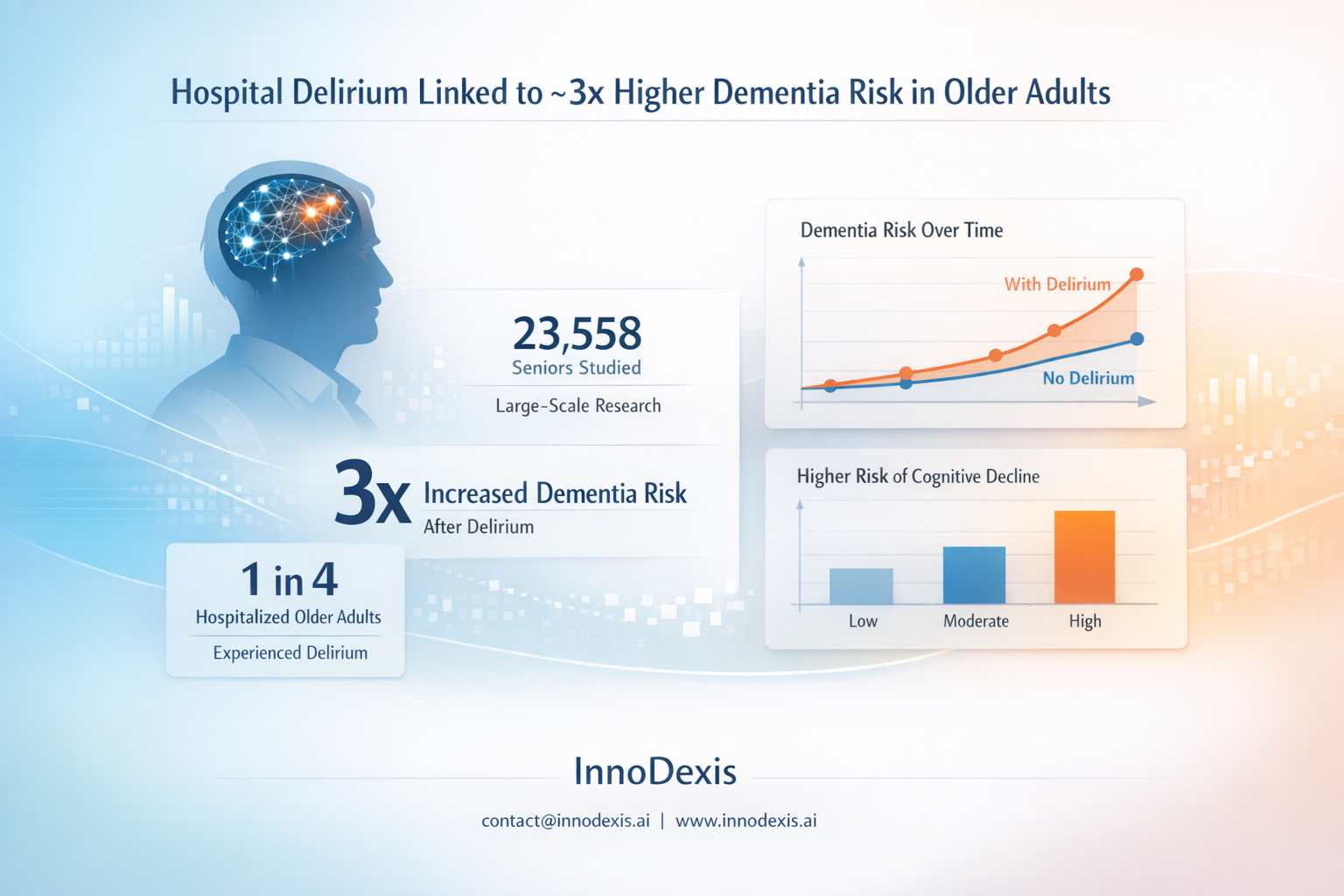
InnoDexis has published its latest Innovation Intelligence Report covering clinical research on delirium and long-term cognitive outcomes, analyzing linked healthcare data from 23,558 adults aged 65 and above. The report reveals that delirium, affecting approximately 25% of hospitalized older adults, is associated with an approximately threefold increase in subsequent dementia risk. The findings suggest that delirium may represent an early signal of neurocognitive decline rather than a transient condition, with implications for how healthcare systems approach screening, monitoring, and intervention in aging populations.
Key Findings
The study analyzed healthcare data from 23,558 adults aged 65 and older, providing a large-scale longitudinal view of patient outcomes following episodes of delirium. The dataset enables a detailed assessment of long-term cognitive trajectories in older populations.
Delirium was found to affect approximately one in four hospitalized older adults. This high prevalence indicates that delirium is not an isolated clinical occurrence but a common condition encountered in hospital settings, particularly among aging patients.
Patients who experienced delirium demonstrated an approximately threefold increase in the risk of developing dementia compared to those without delirium. This association suggests a significant link between acute cognitive disturbances and long-term neurodegenerative outcomes.
The relationship between delirium and dementia risk was observed to be stronger in individuals with fewer pre-existing health conditions. This finding indicates that delirium may serve as an early marker of vulnerability even among patients not previously identified as high risk.
The results challenge the conventional classification of delirium as a short-term complication. Instead, the data supports a perspective in which delirium may be part of a broader trajectory of cognitive decline.
Strategic Insight and Trend Analysis
The findings indicate a shift in how delirium may be interpreted within clinical and healthcare system contexts. Traditionally, delirium has been treated as an acute and reversible condition, often associated with hospitalization, infection, or medication effects. However, the observed association with increased dementia risk suggests that delirium may also reflect underlying neurological processes that extend beyond the immediate episode.
Reframing delirium as a potential early warning signal introduces a different clinical paradigm. Rather than focusing solely on short-term management, healthcare providers may need to consider long-term monitoring and follow-up for patients who experience delirium. This approach aligns with broader trends in preventive and predictive healthcare, where early indicators are used to identify individuals at risk of chronic conditions.
The stronger association observed in patients with fewer pre-existing conditions further reinforces the potential role of delirium as an early signal rather than a secondary complication. This suggests that delirium may reveal latent cognitive vulnerability that is not captured through traditional risk assessment frameworks.
At a system level, the findings highlight the importance of integrating acute care data with longitudinal health records. The use of linked healthcare datasets in this study demonstrates how large-scale data analysis can uncover patterns that are not immediately visible in isolated clinical encounters.
Global and Industry Implications
For corporates and R&D teams in healthcare and digital health, the findings suggest opportunities to develop tools for early detection and monitoring of cognitive decline. Integrating delirium screening into clinical workflows could support the identification of at-risk populations and enable earlier intervention strategies.
For investors and capital allocators, the association between delirium and dementia risk highlights a potential area of innovation in preventive healthcare. Solutions focused on cognitive monitoring, hospital-based screening, and post-discharge care pathways may gain relevance as healthcare systems prioritize early detection.
For policymakers and public health bodies, the high prevalence of delirium and its potential link to dementia risk underscore the need for updated clinical guidelines and screening protocols. Incorporating routine delirium assessment into hospital admissions may support broader strategies for managing aging populations and reducing long-term healthcare burden.
InnoDexis Statement
“The evidence suggests that delirium may function as an early indicator of cognitive decline, highlighting the need to integrate acute clinical events into long-term brain health strategies,” noted InnoDexis in its latest intelligence report.
Conclusion
The association between delirium and increased dementia risk represents a potential shift in how cognitive health is understood in aging populations. By identifying delirium as more than a temporary disturbance, the findings introduce new considerations for clinical practice, data integration, and preventive care strategies. As healthcare systems continue to address the challenges of aging demographics, early signals such as delirium may play a role in shaping future approaches to cognitive health management. The complete Delirium and Cognitive Decline Intelligence Report is available to InnoDexis subscribers and enterprise clients.
About InnoDexis
InnoDexis is a global Innovation Intelligence platform that tracks, analyzes, and interprets breakthrough innovations, prototypes, and emerging technologies across industries and countries. Its intelligence helps corporates, investors, and policymakers understand the true structure and direction of global innovation. Learn more at innodexis.ai.