GLP-1 Research Expands Beyond Metabolism as Neural Reward Pathways Become a Focus of Brain-Behavior Studies
Research from University of Virginia suggests oral GLP-1 therapies may directly influence neural circuits associated with reward, motivation, and dopamine signaling.
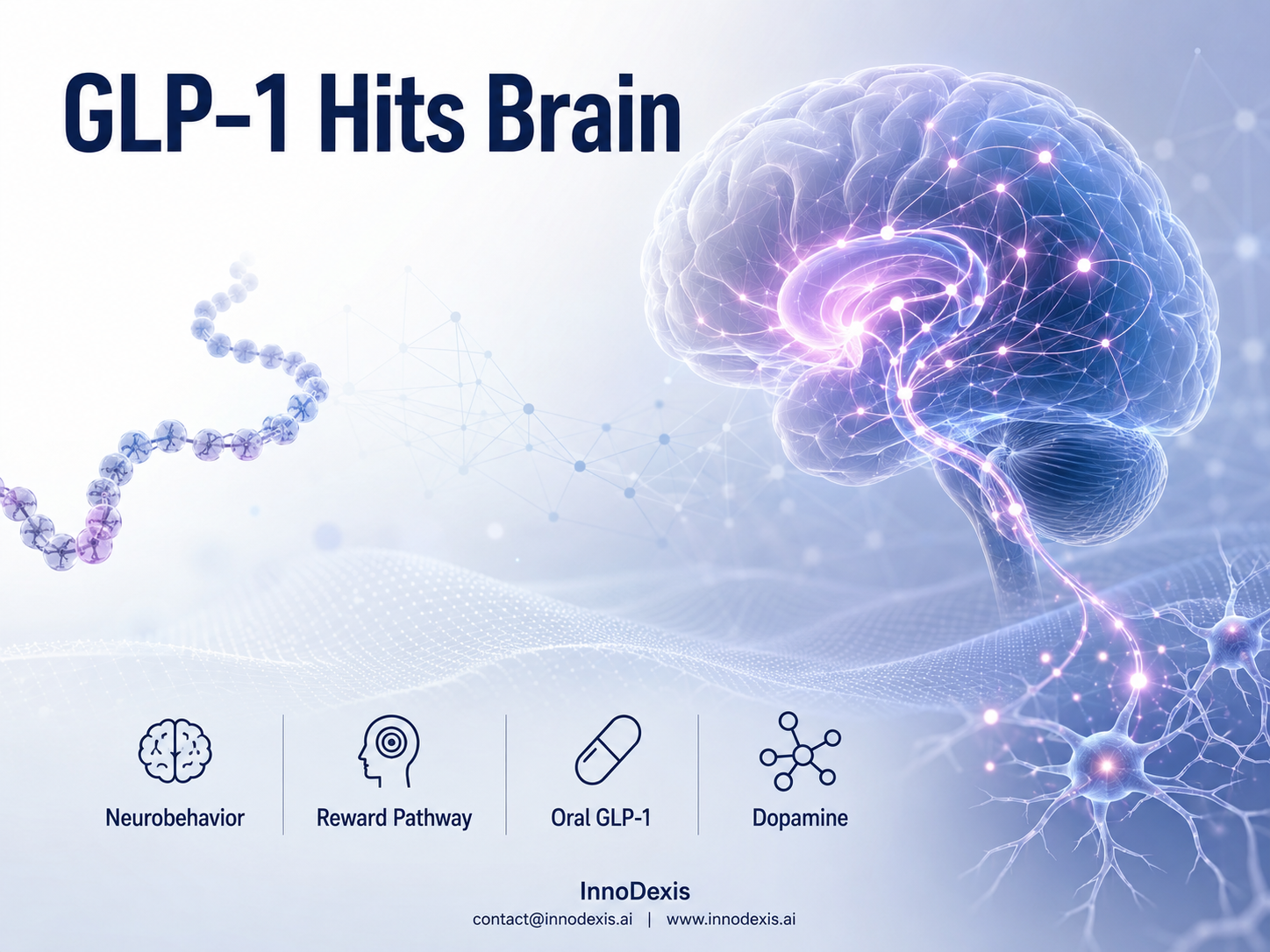
InnoDexis has published its latest Innovation Intelligence Report covering GLP-1 therapies and neurobehavioral research, analyzing recent findings from University of Virginia. The report reveals that GLP-1 drugs may influence more than appetite regulation by acting directly on neural pathways linked to reward and motivation. The findings indicate that oral GLP-1 therapies could affect how the brain processes rewarding behavior, expanding the potential implications of these treatments beyond metabolic disease management.
Key Findings
Researchers at University of Virginia mapped a neural pathway connecting the hindbrain, amygdala, and dopamine neurons. This circuitry is associated with reward processing and motivational behavior, indicating that GLP-1 therapies may directly interact with brain systems involved in behavioral regulation.
The study found that GLP-1 drugs appear to reduce motivation to seek rewarding foods. Rather than functioning solely through metabolic pathways, the therapies may alter how reward-related stimuli are perceived and prioritized within the brain.
Oral small-molecule GLP-1 therapies demonstrated the ability to access deep brain regions. This expands the significance of oral delivery mechanisms, suggesting that non-injectable therapies may influence neural activity in ways previously associated primarily with systemic metabolic effects.
The findings also suggest potential relevance for addiction and impulse-control disorders. By modulating pathways associated with craving and reward perception, GLP-1 therapies may have implications extending beyond obesity treatment into broader neurobehavioral applications.
The convergence of metabolic regulation and neural reward modulation positions GLP-1 therapies within an emerging category of treatments that influence both physiological and behavioral systems simultaneously.
Strategic Insight and Trend Analysis
The findings from University of Virginia indicate that GLP-1 therapies may be transitioning from a narrowly defined metabolic treatment category toward broader neurobehavioral applications. This represents a structural expansion in how these therapies are understood within healthcare and pharmaceutical innovation.
Historically, GLP-1 drugs have been positioned primarily around appetite suppression, glucose regulation, and weight management. The identification of direct interactions with reward-related neural pathways suggests that these therapies may also influence craving, motivation, and behavioral decision-making processes. This introduces a convergence between metabolic medicine and neuroscience.
The ability of oral small-molecule GLP-1 therapies to access deep brain regions is particularly significant from a scalability perspective. Oral formulations may lower barriers to access compared with injectable therapies while broadening the range of potential treatment applications. This could influence future development strategies across obesity, addiction, and behavioral health markets.
The findings also raise strategic and ethical considerations. If therapies designed for metabolic regulation begin influencing broader reward behavior, the distinction between physiological treatment and behavioral modulation may become increasingly complex. Questions surrounding long-term cognitive effects, treatment boundaries, and regulatory oversight are likely to become more prominent as research progresses.
Collectively, the data suggests that future GLP-1 innovation may not be defined solely by weight reduction outcomes, but by how these therapies reshape the relationship between metabolism, neural circuitry, and behavior.
Global and Industry Implications
For corporates and R&D teams, the findings indicate opportunities to expand GLP-1 research into neurobehavioral and psychiatric domains. Pharmaceutical development strategies may increasingly integrate neuroscience, metabolic medicine, and behavioral science capabilities.
For investors and capital allocators, the convergence of obesity treatment and neural reward modulation expands the commercial scope of GLP-1 platforms. Oral delivery technologies and therapies targeting addiction or impulse-control pathways may emerge as new areas of strategic interest.
For policymakers and healthcare systems, the potential behavioral influence of GLP-1 therapies introduces considerations around regulatory classification, clinical oversight, and ethical use. As these treatments evolve, frameworks addressing both metabolic and neurobehavioral outcomes may become necessary.
InnoDexis Statement
“The emerging evidence surrounding GLP-1 therapies suggests that metabolic treatments may increasingly function as modulators of neural reward systems, creating a convergence between obesity medicine, neuroscience, and behavioral health,” noted InnoDexis in its latest intelligence report.
Conclusion
The latest findings from University of Virginia indicate that GLP-1 therapies may influence reward processing and motivational behavior through direct neural pathway interaction. As oral formulations and brain-accessible delivery systems continue to advance, the implications of GLP-1 innovation may extend beyond metabolism into broader behavioral and neurological applications. Monitoring how these therapies are validated, regulated, and adopted will be central to understanding the next phase of metabolic and neurobehavioral medicine. The complete GLP-1 and Neurobehavioral Innovation Intelligence Report is available to InnoDexis subscribers and enterprise clients.
About InnoDexis
InnoDexis is a global Innovation Intelligence platform that tracks, analyzes, and interprets breakthrough innovations, prototypes, and emerging technologies across industries and countries. Its intelligence helps corporates, investors, and policymakers understand the true structure and direction of global innovation. Learn more at innodexis.ai.
#InnoDexis #GLP1 #Neuroscience #HealthcareInnovation #ObesityResearch #PharmaInnovation #Biotech #BrainScience #AddictionTreatment #FutureOfMedicine