European Organizations Advance Sovereign Supercomputing Strategy Through EUPEX Pilot Initiative
The EUPEX Pilot signals a shift from performance-focused supercomputing toward integrated control of hardware, software, and infrastructure within Europe.
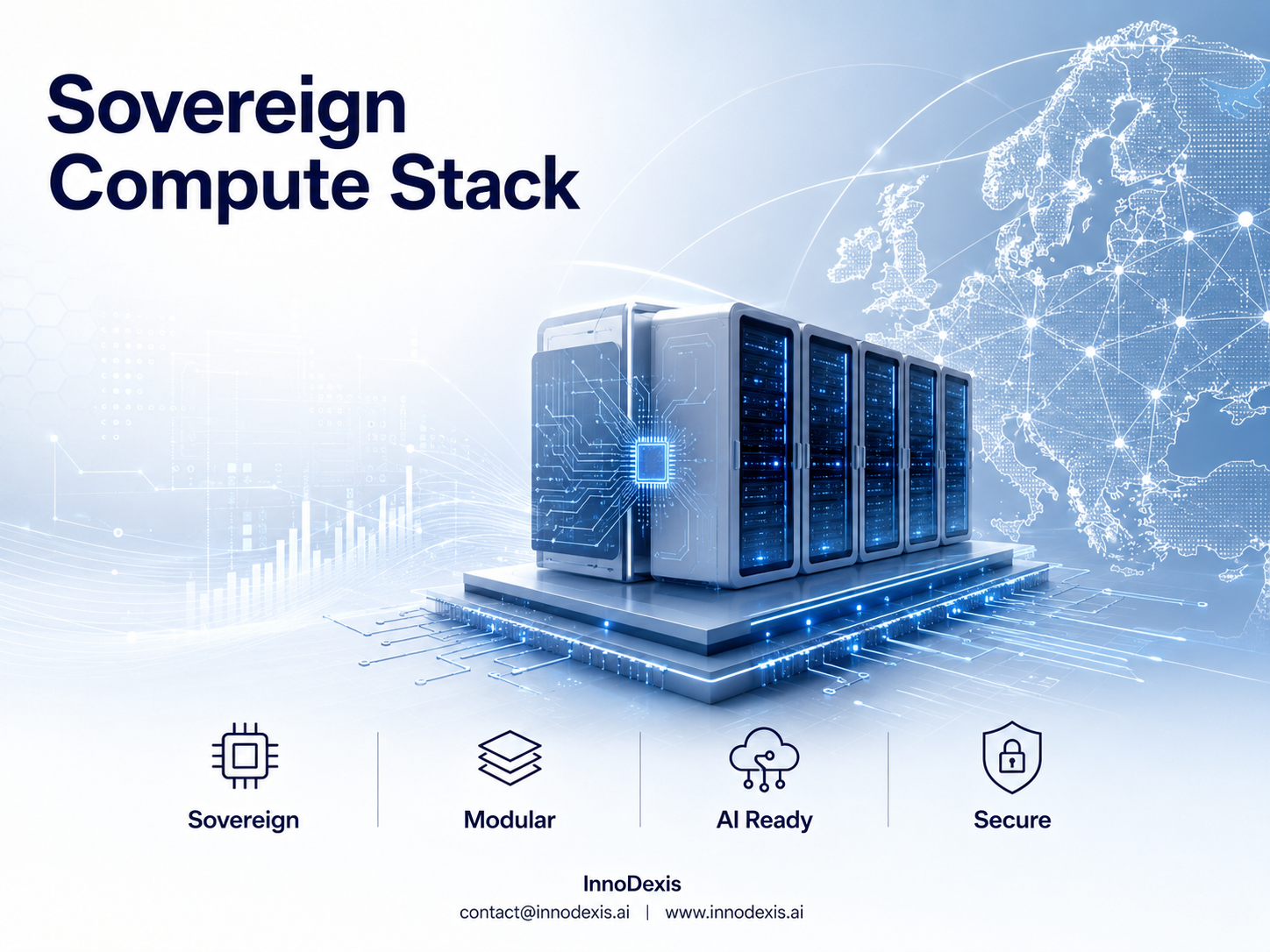
InnoDexis has published its latest Innovation Intelligence Report covering high-performance computing infrastructure and sovereign AI systems, analyzing the EUPEX Pilot initiative led by Eviden alongside a consortium of 17 European organizations. The report reveals that the initiative is focused on building a fully sovereign high-performance computing stack designed, developed, and operated within Europe. Through integrated hardware-software architecture and modular system design, the project reflects a broader transition in supercomputing strategy from raw computational performance toward infrastructure control and technological sovereignty.
Key Findings
The EUPEX Pilot initiative is developing an end-to-end high-performance computing system built on European ARM-based processors and a European software stack. This approach represents a move toward reducing reliance on external compute technologies across both hardware and software layers.
The system is structured around Modular Supercomputing Architecture (MSA), enabling flexible scaling across different computational workloads. The modular design supports adaptability for evolving AI, scientific, and climate-related applications while potentially reducing infrastructure rigidity.
The platform is being positioned as an early-access environment for artificial intelligence, climate modeling, and scientific research workloads. This indicates that the initiative is intended not only as a technical demonstration but also as an operational infrastructure layer for strategic computing domains.
The project reflects a broader shift toward software-first co-design across the compute stack. Rather than optimizing hardware independently, the architecture emphasizes coordinated integration between processors, system software, and workload orchestration.
The participation of 17 European organizations highlights the collaborative nature of the initiative and the scale of coordination required to establish sovereign compute capabilities. The structure suggests increasing emphasis on ecosystem-wide integration rather than isolated infrastructure deployment.
Strategic Insight and Trend Analysis
The EUPEX Pilot reflects an emerging transition in high-performance computing from a hardware-centric performance model toward an infrastructure sovereignty model. Historically, supercomputing competition has been defined primarily by processing speed and benchmark rankings. The current initiative indicates that control over the full compute stack is becoming a strategic objective in itself.
By integrating European-designed processors with a regionally developed software ecosystem, the initiative demonstrates how computational infrastructure is increasingly linked to resilience, security, and long-term technological independence. This shift aligns with broader geopolitical concerns regarding dependency on external semiconductor, software, and cloud ecosystems.
The adoption of Modular Supercomputing Architecture further suggests that flexibility and interoperability are becoming strategic priorities alongside performance. As AI and scientific workloads evolve rapidly, modular infrastructure may provide greater adaptability than tightly fixed architectures designed for singular optimization goals.
The findings also indicate that software coordination is becoming central to supercomputing competitiveness. The movement toward software-first co-design reflects recognition that computational efficiency increasingly depends on how hardware and software layers interact across the entire system. In this model, sovereign capability is not defined solely by processor ownership, but by the ability to coordinate silicon, operating environments, orchestration systems, and applications within a unified framework.
At the same time, the initiative highlights execution challenges associated with sovereign infrastructure development. Integration complexity, hardware maturity, and ecosystem alignment remain critical variables that may influence deployment timelines and long-term competitiveness.
Global and Industry Implications
For corporates and R&D teams, the findings indicate growing importance of vertically integrated compute infrastructure strategies. Organizations operating in AI, climate modeling, and advanced simulation may increasingly evaluate infrastructure resilience and stack control alongside raw performance metrics.
For investors and capital allocators, sovereign compute initiatives represent a developing infrastructure category linked to national competitiveness and AI scalability. Investment attention may increasingly focus on companies supporting processor design, system integration, orchestration software, and modular HPC architectures.
For policymakers and national innovation bodies, the EUPEX Pilot demonstrates how supercomputing is evolving into strategic geopolitical infrastructure. Supporting domestic compute ecosystems may become increasingly important for technological resilience, scientific independence, and long-term digital sovereignty.
InnoDexis Statement
“The EUPEX Pilot reflects a structural shift in supercomputing strategy, where control of the integrated compute stack is emerging as a strategic capability alongside computational performance itself,” noted InnoDexis in its latest intelligence report.
Conclusion
The EUPEX Pilot initiative illustrates how high-performance computing is expanding beyond benchmark competition into questions of infrastructure ownership and strategic control. By combining European processors, software ecosystems, and modular system architectures, the project signals a broader movement toward sovereign compute capabilities. As AI and scientific workloads continue to scale, the ability to coordinate hardware and software across the full stack may become a defining factor in global competitiveness. The complete High-Performance Computing Innovation Intelligence Report is available to InnoDexis subscribers and enterprise clients.
About InnoDexis
InnoDexis is a global Innovation Intelligence platform that tracks, analyzes, and interprets breakthrough innovations, prototypes, and emerging technologies across industries and countries. Its intelligence helps corporates, investors, and policymakers understand the true structure and direction of global innovation. Learn more at innodexis.ai.