Colorectal Cancer Incidence Shifts Toward Younger Adults as Minimally Invasive Surgery Adoption Accelerates
Rising incidence among patients under 50 is accompanied by rapid adoption of surgical techniques prioritizing recovery time and post-treatment quality of life.
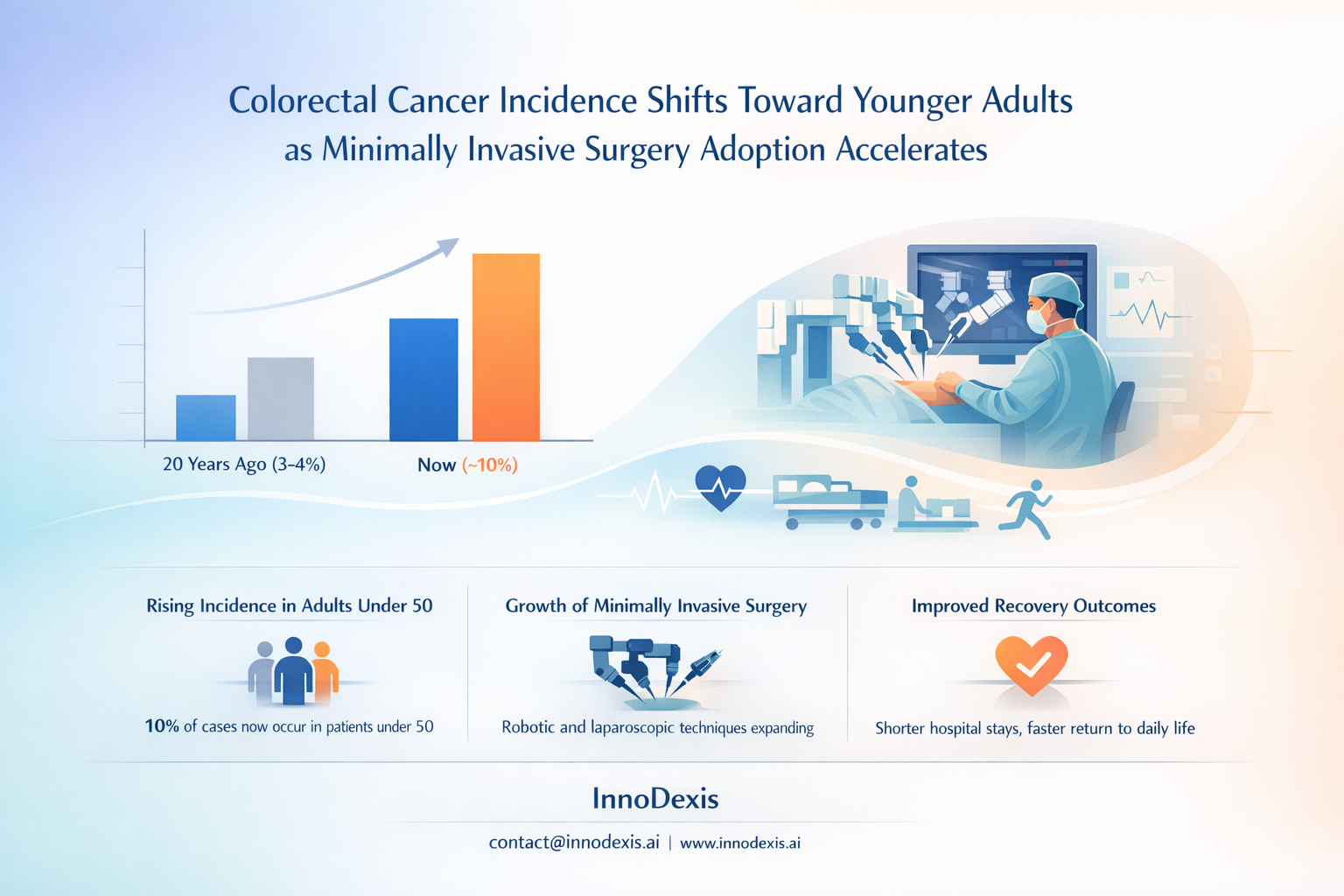
InnoDexis has published its latest Innovation Intelligence Report covering colorectal cancer treatment innovation, analyzing evolving surgical approaches and patient trends during recent clinical observations. The report reveals that approximately 10% of colorectal cancer cases now occur in individuals under the age of 50, compared to just 3–4% two decades ago. Alongside this demographic shift, healthcare systems are increasingly adopting minimally invasive surgical techniques and multimodal care pathways, reflecting changing patient expectations and treatment priorities.
Key Findings
Colorectal cancer incidence among younger adults has increased, with approximately 10% of cases now occurring in individuals under 50. This represents a notable rise from 3–4% reported two decades earlier, indicating a measurable demographic shift in disease occurrence.
Surgical innovation is advancing in parallel with this trend, particularly through the adoption of robotic and laparoscopic procedures. These minimally invasive approaches are becoming more widely implemented in clinical settings, reflecting a shift in how surgical care is delivered.
Clinical outcomes associated with minimally invasive surgery include shorter hospital stays and reduced post-operative complications. These improvements suggest enhanced procedural efficiency and better immediate recovery trajectories for patients.
Patients undergoing these procedures are experiencing faster returns to daily activities and professional responsibilities. This reflects an increasing emphasis on minimizing disruption to normal life following treatment.
Treatment pathways are evolving toward multimodal care models that integrate surgery, chemotherapy, and radiation. This coordinated approach indicates a broader shift toward comprehensive and personalized cancer treatment strategies.
Strategic Insight and Trend Analysis
The observed increase in colorectal cancer cases among individuals under 50 represents a structural shift in disease demographics. This change introduces new clinical and systemic considerations, as younger patients often present different health profiles, expectations, and long-term outcome priorities compared to older populations.
The parallel rise in minimally invasive surgical adoption suggests alignment between technological capability and patient-centered care demands. Robotic and laparoscopic procedures are not only improving clinical efficiency but also enabling treatment models that prioritize recovery timelines and reduced physical burden.
The integration of multimodal care pathways further reflects a transition from isolated treatment interventions to coordinated therapeutic strategies. By combining surgery with chemotherapy and radiation, healthcare providers are addressing both disease management and patient experience in a more structured manner.
Collectively, these developments indicate a shift in oncology from a survival-focused paradigm toward one that incorporates recovery quality and continuity of daily life. The data suggests that treatment innovation is increasingly shaped by patient expectations, particularly as the affected population becomes younger and more active.
Global and Industry Implications
For corporates and R&D teams, the data highlights increasing demand for technologies that enable minimally invasive procedures and integrated treatment pathways. Innovation efforts may increasingly focus on surgical precision, recovery optimization, and patient-centered care delivery systems.
For investors and capital allocators, the shift toward younger patient demographics and evolving treatment models indicates emerging opportunities in surgical technologies, oncology platforms, and care coordination solutions. The alignment of clinical outcomes with lifestyle considerations may influence future investment priorities.
For policymakers and national health systems, the rising incidence among younger populations raises questions around screening protocols and early detection strategies. Existing frameworks may require reassessment to address changing risk profiles and ensure timely diagnosis.
InnoDexis Statement
“The convergence of younger patient demographics and minimally invasive surgical adoption signals a transition in oncology toward treatment models that balance clinical outcomes with recovery experience and life continuity,” noted InnoDexis in its latest intelligence report.
Conclusion
The evolving landscape of colorectal cancer treatment reflects both a demographic shift and a transformation in care delivery. As incidence rises among younger adults, healthcare systems are adapting through minimally invasive surgical techniques and integrated treatment approaches. These changes suggest that future oncology strategies will increasingly emphasize not only survival, but also recovery quality and long-term lifestyle impact. The complete Colorectal Cancer Treatment Innovation Report is available to InnoDexis subscribers and enterprise clients.
About InnoDexis
InnoDexis is a global Innovation Intelligence platform that tracks, analyzes, and interprets breakthrough innovations, prototypes, and emerging technologies across industries and countries. Its intelligence helps corporates, investors, and policymakers understand the true structure and direction of global innovation. Learn more at innodexis.ai.